

Alexandria Sade
Founder & Executive Director, Black Girls Love Vinyl
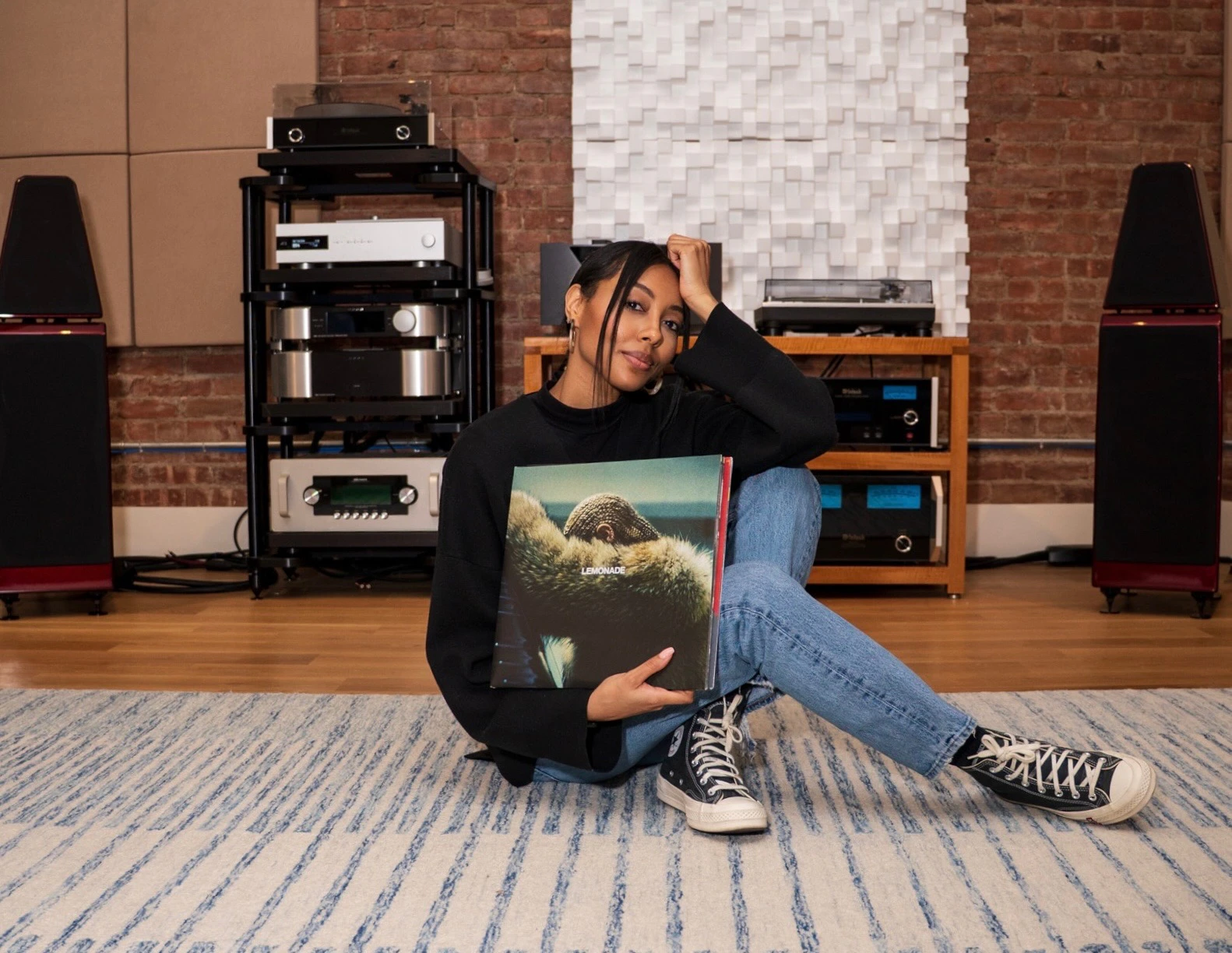
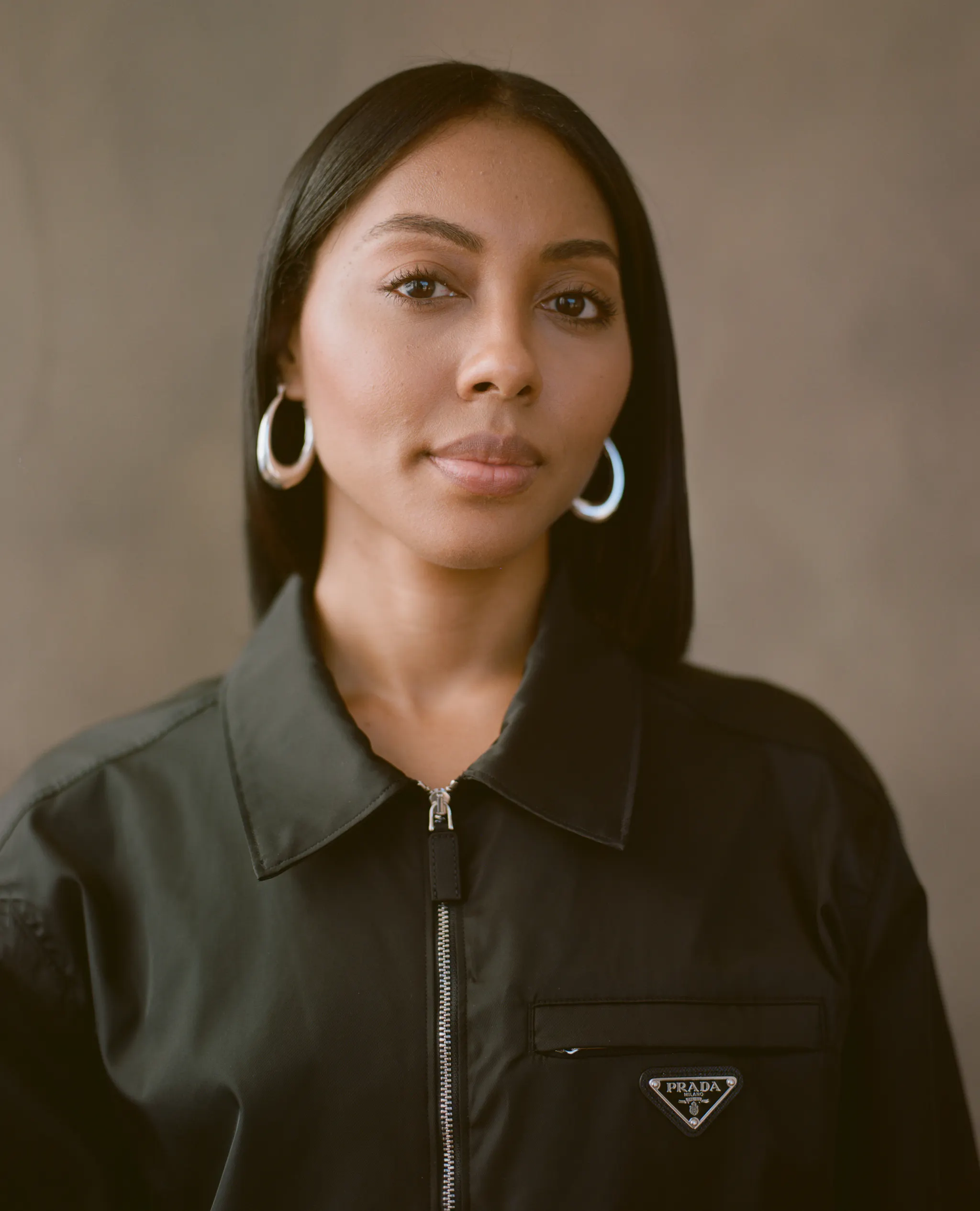
Born and raised in St. Louis and now based in Brooklyn, Alexandria Sade is an archivist, curator, and music industry professional who has been collecting music since childhood and vinyl since 2013. Alongside her work in music supervision and clearances, including credits on Kevin Hart’s Lil Kev and Deepfaking Sam Altman, she has spent the last eight years building Black Girls Love Vinyl and creating space for the stories, collections, and musical histories of Black women.
Founded in 2018, Black Girls Love Vinyl (BGLV) has grown from an online community into a mission-driven cultural platform and archive centered on preservation, storytelling, and the relationship Black women have with recorded sound. Through listening events, record shop meetups, archival work, programming, and cultural experiences, BGLV treats records as more than something we collect, but as vessels for memory, identity, lineage, and stories to be carried forward.
Outside of work, Alexandria is digging for records. "That never fully feels like work to me, even when it is." She notes that she has many other interests like reading articles and watching videos and films on skateboarding culture, and right now is deep into genealogical research; "...I've been tracing my maternal family line and finding documented roots I didn't have language for before." She says she is also slowly turning into a pharologist and wants to visit as many lighthouses as she can. Her curiosity turns into research as a rabbit hole hobby.
How did you get into your industry / What motivated you?
My passion for music has brought healing to me in a way that allows me to stay grounded in my taste as a listener while being professional on the business side. I came into the industry in a non-linear way, which eventually led me to music publishing, marketing and sync licensing at Songtrust and Downtown Music Publishing, then operations during GRAMMY Season at the Recording Academy LA Chapter, which led me into my dream field of music supervision.
But vinyl was personal before it was professional. I started collecting records during my time at Hampton University, and the more I was digging and traveling, the more I noticed that Black women were not centered in the cultural conversation around being music lovers the way they deserved to be. That gap was the motivation. I started the Glow of Sunrise imprint first, which eventually became the foundation for Black Girls Love Vinyl in 2018. It grew from a real absence I wanted to fill..
What is a day in the life like?
No two days look the same, which is both the gift and the challenge. My morning routine is vital to setting the tone of my day, so that's non-negotiable time for me. It's at least two hours, and the last part of that routine is listening to "Sunbeams" by J Dilla extended or "Morning Glory" by Jamiroquai instrumental while eating and moving through self-talk and thoughts, then hitting the ground running.
With BGLV there are lots of meetings and strategizing, and there's always long-horizon thinking layered into the day-to-day. I work hard to protect time for the slow, material-led archival work that's at the center of everything. With music supervision, I'm the only person on my team on the opposite coast, which opens up daytime hours but can also mean I'm working at 9pm.
In your opinion what has been your favorite / the coolest thing you've worked on?
Even though bringing a group of women music lovers to Brazil was honorable in itself, I would say the BGLV event with Janelle James. It brought beautiful challenges that I had to truly think outside the box for. She gave special instructions and parameters we had to work around that constantly had me digging deeper creatively. She was the best to work with, and being an advocate for the brand throughout made it that much more meaningful. It was a full circle moment to be back in LA in the way I always knew I would be. I was so happy I had the opportunity to use every bit of knowledge I'd gained to bring that experience to life for her while honoring BGLV at its core. I learned a lot about myself.

What has been / is the most difficult part of your job?
With BGLV, holding a vision that lives across multiple timelines simultaneously, the urgent operational work, the slow archival work, the institutional infrastructure, the community layer, while staying anchored in the original intention. It can be easy to slip into reactive mode and lose sight of the throughline.
The other honest answer is that centering Black women's stories and finding a physical home to keep operating this work in spaces that have historically overlooked us requires constant advocacy. That advocacy takes a lot of energy that most people never see or usually understand.
What advice do you have for someone wanting to get into pursuing what you’re doing?
...give yourself permission to be fully and authentically who you are without looking outside yourself to fulfill the work, because you stayed obedient, disciplined, consistent, and kept showing up...
Start from something real, a genuine gap you notice, a story you feel compelled to tell. Don't chase an aesthetic version of the work. Build from a specific and grounded place. Always remain a student. When things feel uncertain, fall back on your integrity and make decisions you can stand ten toes behind. The resources I love most are the ones that come from listening to that inner intuition.
The best resources find you when you give yourself permission to be fully and authentically who you are without looking outside yourself to fulfill the work, because you stayed obedient, disciplined, consistent, and kept showing up even when it was hard or didn't make sense to.
Are you a vinyl collector yourself? What drew you to it? If not, why the vinyl industry?
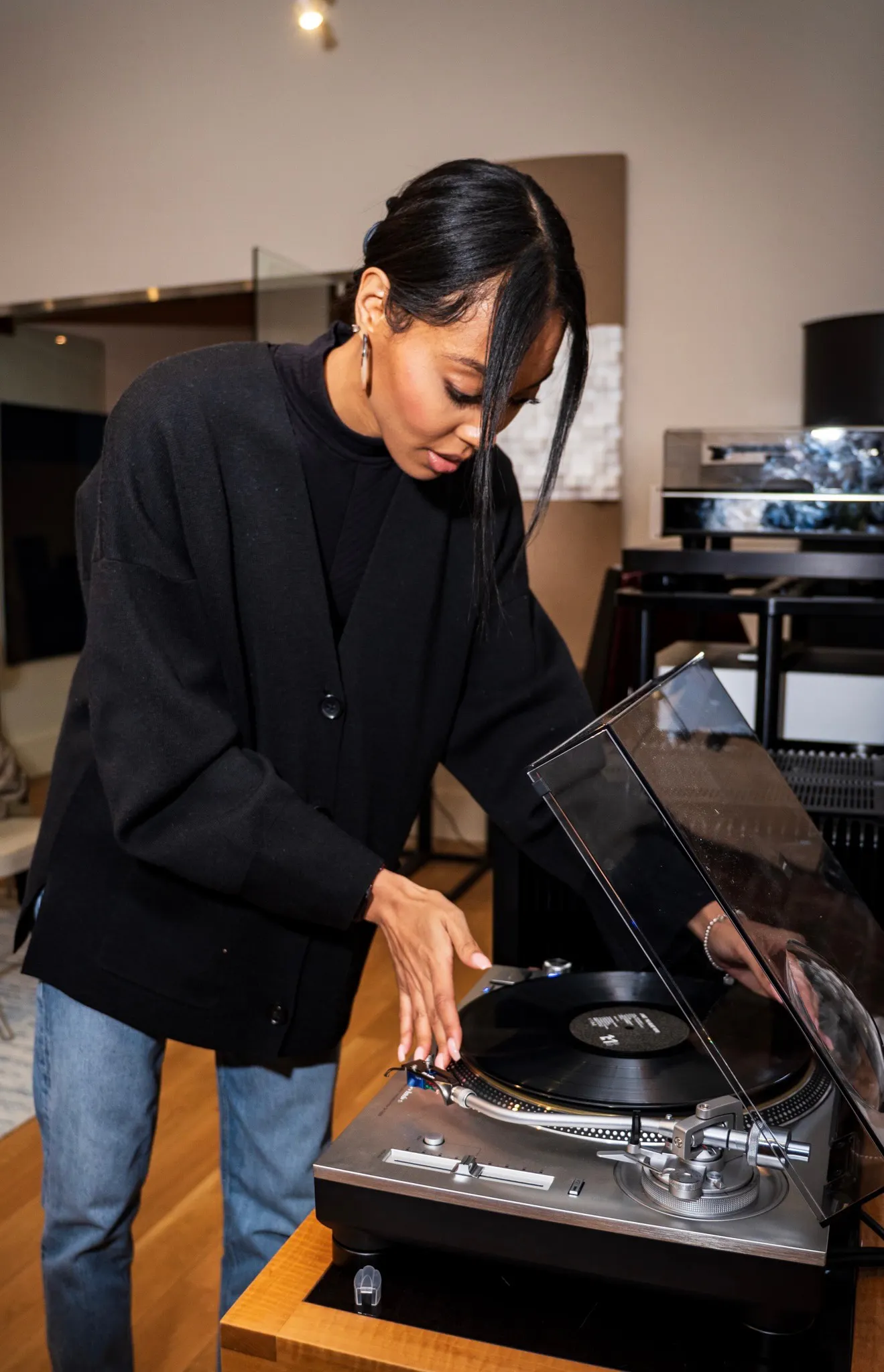
Yes, 13+ years deep. I love music production so I was drawn in by the ritual of discovery, the slowing down, the physicality, the way a record demands your attention. But what has kept me is the archive. Every record is a document. When I'm out diggin in crates, I'm doing research. The grooves hold something that streaming can't replicate, not just sonically but culturally. A pressing from a specific era, the liner notes, the label, these are primary sources. That's how I relate to vinyl.
What types of things are happening in your industry / with vinyl that you’re excited or worried about? i.e. innovation, or trends you’re seeing.
I'm genuinely excited about the renewed investment in preservation. More institutions are taking recorded sound seriously as archival material, and more collectors are thinking about where their collections go when they're gone. The rise of women-centered vinyl communities has been meaningful to witness; that shift in who claims space at the table is real and necessary.
What concerns me is when vinyl culture gets commercialized in ways that strip away its depth. There is a difference between crate diggin as a cultural practice and crate diggin as content. There is a difference between an archive and an aesthetic. I want to protect that distinction. There is also a real conversation to be had about pressing plant capacity, quality control, and who has access to pressing. The infrastructure of the industry has not always caught up with demand, and smaller, independent, and archival releases can get squeezed as a result.
I firmly believe that stories from certain communities, particularly the Black community, should be reissued and told by those communities for true connected storytelling. That gap is real and it is one I intend to contribute to in a meaningful way.

Who has been influential to you and your growth as a professional in this industry?
Portia K. Maultsby, whose scholarship on Black American music and commitment to documenting what others overlooked is my career north star I'm genuinely inspired by and aim to honor in my own way. DJ Soul Sister, a cultural steward whose relationship to the music has always mirrored how I think about this work. Beverly Bond, founder of Black Girls Rock, for proving that a platform built around celebrating Black women can endure.
Solange Knowles, for demonstrating that curation is an act of care, and that pulling from many different mediums to bring Black stories to life with intentionality is not only possible but powerful. She gave language to something I was already feeling. Pilar McCurry, rest her beautiful soul, one of the first Black women I learned about as a music supervisor, whose work on Love Jones, one of my favorite films, opened a door I didn't know existed and led me to discover so many more Black women in this field, including one I work with today. Pilar is my blueprint. Theaster Gates and the Rebuild Foundation, an institutional model for what it looks like to hold a physical archive with permanence and community in mind. His work is a living example of what I want my work to grow into.
And always, the women in this music ecosystem and my own community, collectors, curators, and culture workers who have built quietly and rigorously for years without waiting for permission or a spotlight. They are the foundation.
Anything else you want to share? If not, tell us what you're listening to right now:
Right now I keep returning to southern hip-hop, soul and gospel. There's a documentary quality to that sound I find grounding, music that knows exactly where it came from. Current rotation has always been heavy on Sade, N.E.R.D., and Lonnie Liston Smith. I've been feeling more purposefully radical and free lately so Jimi Hendrix, Parliament Funkadelic, and house music have all been getting their time. It's a range and I stand by every bit of it.
On the BGLV side: the archive is growing, the programming is deepening, and we are in an intentional season of building infrastructure that matches the scale of the vision. The work is just getting started!
Follow Alexandria
We hope you enjoyed this content! If so inclined please donate so we can continue bringing you more like this. There is no amount too small.